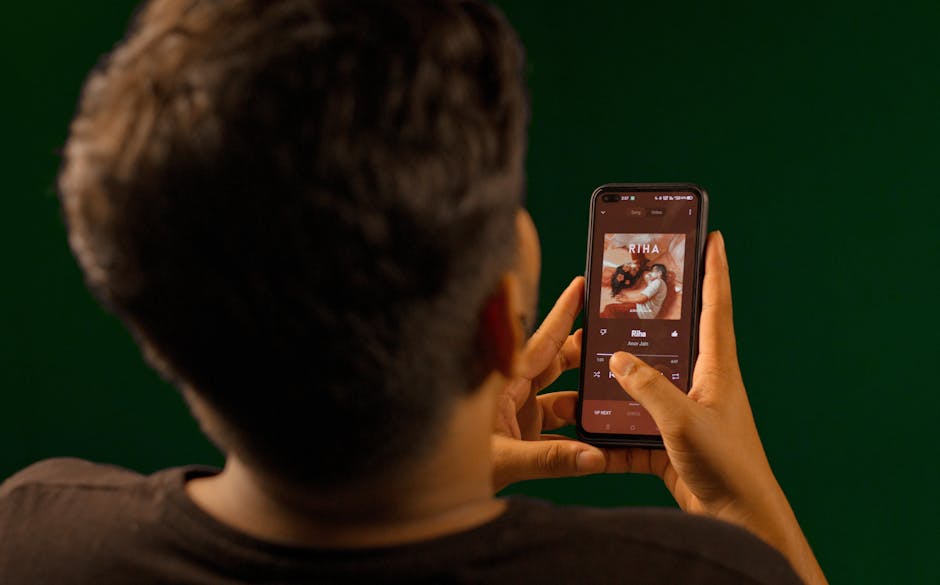

When most musicians hear "make a video," their brain goes straight to a music video — a shoot, a location, actors, maybe a director. Something that takes weeks and costs money they don't have.
That's not what we're talking about.
A release video is something much simpler. It's a short vertical clip — usually 30 to 60 seconds — that plays your song and gives viewers something to look at. That's the whole job. It exists to make your music postable on Instagram Reels, TikTok, and YouTube Shorts, where a link to Spotify on its own goes nowhere.
You've probably seen them without noticing. Animated cover art. A slow zoom on a photo. Text appearing on screen in time with the lyrics. A colored waveform bouncing to the beat — the same kind of visualizer you've seen musicians post on Reels. None of these require editing skills. They just require having the right tool.
What a Release Video Needs to Do
It has one job: keep someone watching long enough to hear the hook.
That's it. You're not trying to tell a story or show your face or demonstrate anything. You're creating a reason for the platform to serve your audio to someone who doesn't follow you yet, and a reason for that person to stop scrolling for 15 seconds.
Which means the visuals need to move, the song needs to start immediately, and it should be vertical — 9:16, the same format as a phone screen held upright.
Everything else is optional.
What Makes a Release Video Feel Right
A few things matter more than you'd think.
Start with the strongest part of the song. Not the intro, not the buildup. The hook, or the line that hits hardest. Reels and TikToks don't get a slow burn — you have about two seconds before someone keeps scrolling.
Let the artwork do some work. If you spent time on your cover art, a release video is where it earns its place. Animated, zoomed, panned, or just shown cleanly against a color — your artwork is more than a Spotify thumbnail. It's the visual identity of the song.
Keep it short. 30 to 45 seconds is the sweet spot. Long enough to get through the hook, short enough that people watch it again. Replays are a strong signal to every algorithm.
Don't add a lot of text. One line — maybe the song title, maybe a lyric — is enough. The goal is for the music to be the thing, not a graphic.
The Part People Overcomplicate
A lot of musicians stall here because they open Premiere Pro or CapCut and immediately feel out of their depth. That's a tool mismatch, not a skills problem.
Release videos for music aren't film editing. You're not cutting between clips or building a timeline from footage. You're combining a song file, a piece of artwork, and a style. That's a different kind of task, and it doesn't require the same tools.
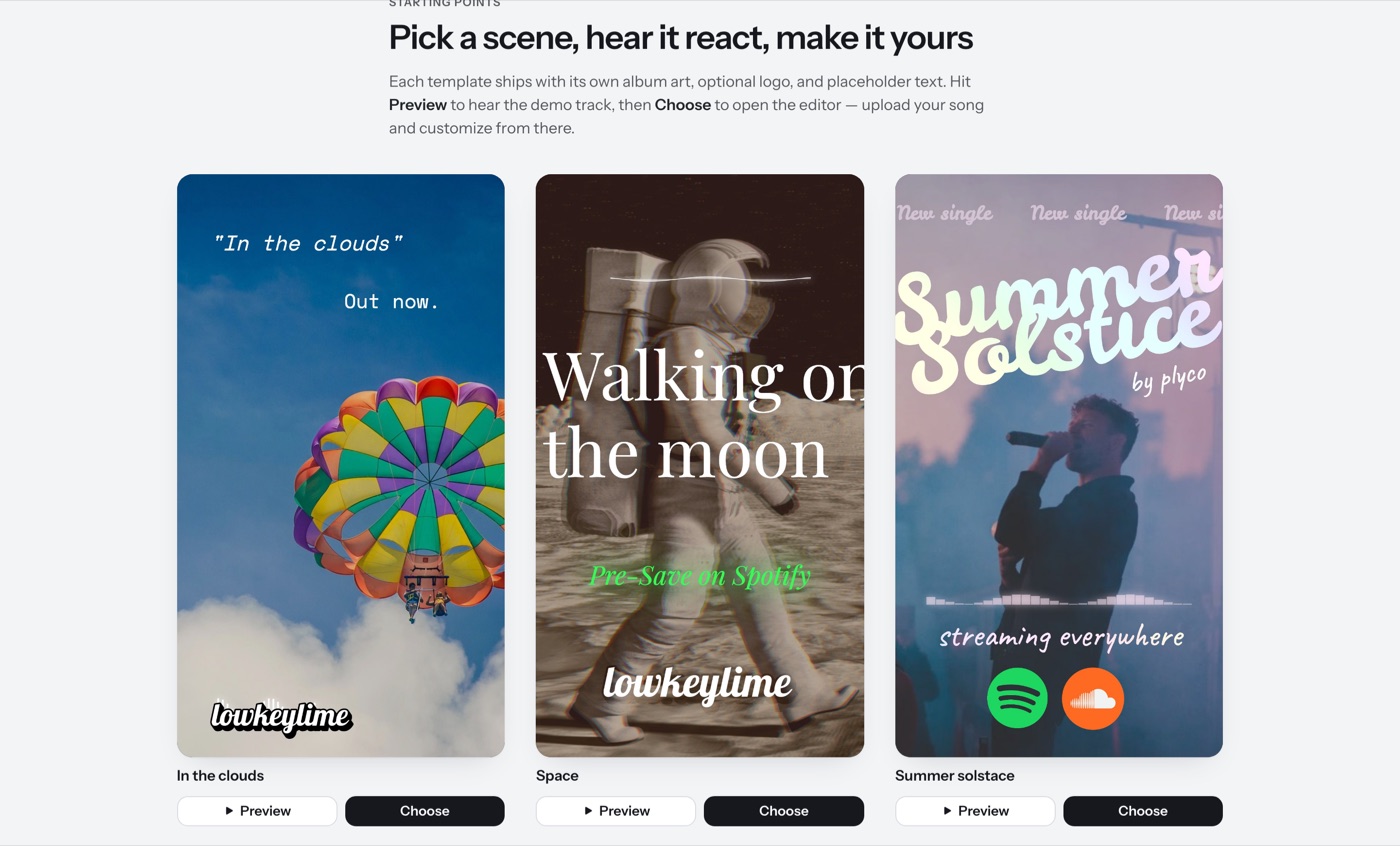
If you've been putting off promotion because making a video feels like too much work, that friction is usually about the tool, not the task.
Once you have the video file, what you do with it matters too — which platforms you post to, what you say in the caption, how many times you post from a single release. We'll get into that in the next post.
For now: a release video is a short, vertical clip that plays your song and moves. You don't need editing experience to make one. You just need to start with the song you already finished.
Frequently Asked Questions
How long should a release video be?
30 to 45 seconds is the sweet spot — long enough to get through the hook, short enough that people watch it again, which is a strong signal to every platform's algorithm.
What aspect ratio should a release video use?
Vertical, 9:16, matching how a phone is held. That's the native format for Instagram Reels, TikTok, and YouTube Shorts.
Do I need a director or actors for a release video?
No. A release video is built from your song and your cover art, not filmed footage, so no shoot, location, or crew is required — tools like TrackVis generate it directly from those two files.